What is a Double Pole Circuit Breaker?
Company News, News 2025-12-03
Imagine this: It’s laundry day, and you hit “start” on your electric dryer—only to hear a loud pop, then silence. You head to your breaker box and spot a switch labeled “30A Double Pole” flipped to “off.” If you’ve ever wondered what that switch does, or why your dryer, oven, or AC relies on it, you’re not alone. A double pole circuit breaker is the unsung workhorse of your electrical system, designed to handle the heavy hitters of your home’s power needs. Let’s break it down in plain English: what a double pole circuit breaker is, how it keeps your 240-volt appliances safe, how it differs from single pole breakers, and when to call in the pros at Sunpeace Electric for help.
What is a Double Pole Circuit Breaker? (And Why Your Dryer Can’t Live Without It)
At its core, a double pole circuit breaker is a safety device built to protect high-voltage circuits—specifically those running on 240 volts. Unlike standard single pole breakers (which handle 120-volt loads like lamps or phone chargers), double pole breakers mean business: they shut off power to two hot wires at once, stopping overloads, short circuits, and electrical faults in their tracks.
Think of it as a two-in-one guard. When your dryer or HVAC system draws more power than it should (say, due to a clogged lint trap or a faulty motor), the breaker flips off, cutting electricity to both wires instantly. This dual shutdown is critical for 240-volt systems, where even one live wire could spark a fire or shock risk.
How Does It Work? (It’s Like a Fire Extinguisher for Your Circuits)
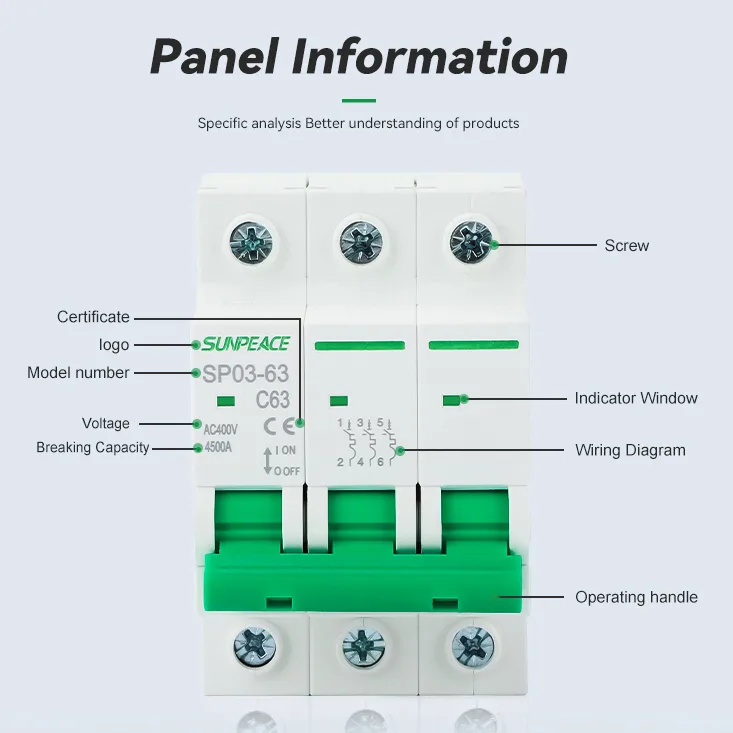
Inside your breaker box, a double pole breaker looks like two single pole breakers fused together, taking up two slots (single pole breakers take one). It’s connected to two “hot” wires (black and red, in most setups) that carry 120 volts each—combined, they make 240 volts for your heavy appliances.
When the breaker detects trouble (like an overload or short circuit), an internal switch trips, disconnecting both hot wires at the same time. No power, no problem. Resetting it is simple: flip the switch all the way off, then back on. But if it trips again? That’s a red flag—more on that later.
Double Pole vs. Single Pole Breakers: Know the Difference (It Matters!)
Wondering why your bedroom lights use a single pole breaker, but your water heater needs a double pole? Let’s keep it simple:
| Feature | Single Pole Breaker | Double Pole Circuit Breaker |
|---|---|---|
| Voltage | 120V (standard outlets, lights) | 240V (dryers, HVAC, electric ranges) |
| Slots in Breaker Box | 1 slot | 2 slots (joined together) |
| Load Capacity | Light duty (15-20 amps) | Heavy duty (20-60 amps) |
| Best For | Lamps, phone chargers, small appliances | Dryers, water heaters, AC units, ovens |
Pro Tip: If you’re ever unsure, check the breaker’s label. Single pole breakers say “15A” or “20A” and control one circuit. Double pole? “30A” or higher, and they’ll have “240V” somewhere on the switch.
When Do You Need a Double Pole Circuit Breaker? (Spoiler: For All the Big Appliances)
Double pole breakers are non-negotiable for any device that runs on 240 volts. Here’s where you’ll find them hard at work:
- Electric dryers: The heating element and motor draw serious power—most need a 30-amp double pole breaker.
- Water heaters: Electric models use 240V to heat water fast; 40-50 amp breakers are standard.
- HVAC systems: Central air conditioners and heat pumps rely on 240V to run compressors and fans.
- Electric ranges/stoves: Burners and ovens need 240V for high heat—look for 40-60 amp breakers here.
Installation & Safety: Don’t DIY This (Here’s Why)
Installing a double pole circuit breaker isn’t as simple as swapping out a light switch. Get it wrong, and you risk fires, shocks, or constant tripping. Here’s what you need to know:
1. Match the Amperage to Your Appliance
A 20-amp breaker won’t cut it for a 30-amp dryer—it’ll trip every time you hit “start.” Always check your appliance’s manual for its amperage rating (e.g., “Requires 30A, 240V circuit”) and match the breaker to it.
2. Follow NEC Codes (Or Risk Fines)
The National Electrical Code (NEC) has strict rules for breaker installation: wire size, panel spacing, and even how the breaker is mounted. Skip these, and your home insurance might deny a claim if there’s a fire.
3. Leave It to the Pros (Sunpeace Electric Can Help)
Unless you’re a licensed electrician, hire a pro. Sunpeace Electric’s team handles everything from breaker sizing to wiring checks. We’ll make sure your 240-volt circuit is safe, compliant, and ready to power your appliances for years.
Troubleshooting: Why Your Double Pole Breaker Keeps Tripping
If your breaker flips off repeatedly, it’s not being “finicky”—it’s protecting your home. Common culprits:
- Overload: Too many devices on the same circuit (e.g., running the dryer and electric heater at the same time).
- Appliance issues: A faulty motor (in your AC) or clogged vents (in your dryer) can cause overheating.
- Wiring problems: Loose connections or frayed wires in the circuit can trigger trips.
Quick Fix: Unplug the appliance, reset the breaker, and plug it back in. If it trips again, call Sunpeace Electric—there might be a hidden wiring issue or a breaker that needs replacement.
Final Thought: Double Pole Breakers = Safety + Power
Your double pole circuit breaker isn’t just another switch in your breaker box—it’s the backbone of your home’s 240-volt system. It keeps your dryer drying, your water hot, and your family safe from electrical fires. And when you need help installing, replacing, or troubleshooting one? Sunpeace Electric is here. Our licensed electricians handle residential and commercial jobs, from breaker swaps to full panel upgrades. Safety first, always—and we make sure your double pole breakers (and your home) stay protected.