MCB: The Complete Guide to Miniature Circuit Breakers
Company News, News 2025-12-05
Understand the essential role of Miniature Circuit Breakers (MCBs) in electrical safety. This guide covers MCB types (B, C, D curves), selection criteria, applications, and how Sunpeace provides reliable circuit protection solutions for modern installations.
Introduction: The Guardian of Your Electrical Circuits
In every home, office, and commercial building, a silent sentinel works behind the walls to prevent electrical disasters: the Miniature Circuit Breaker (MCB). Far more advanced than a simple fuse, the MCB is a fundamental component of modern electrical safety, designed to automatically shut off power during dangerous conditions like overloads and short circuits. This guide provides a comprehensive look at how MCBs function, the critical differences between their types, and key factors for proper selection to ensure the safety and reliability of any electrical installation.

1. How an MCB Works: The Principles of Automatic Protection
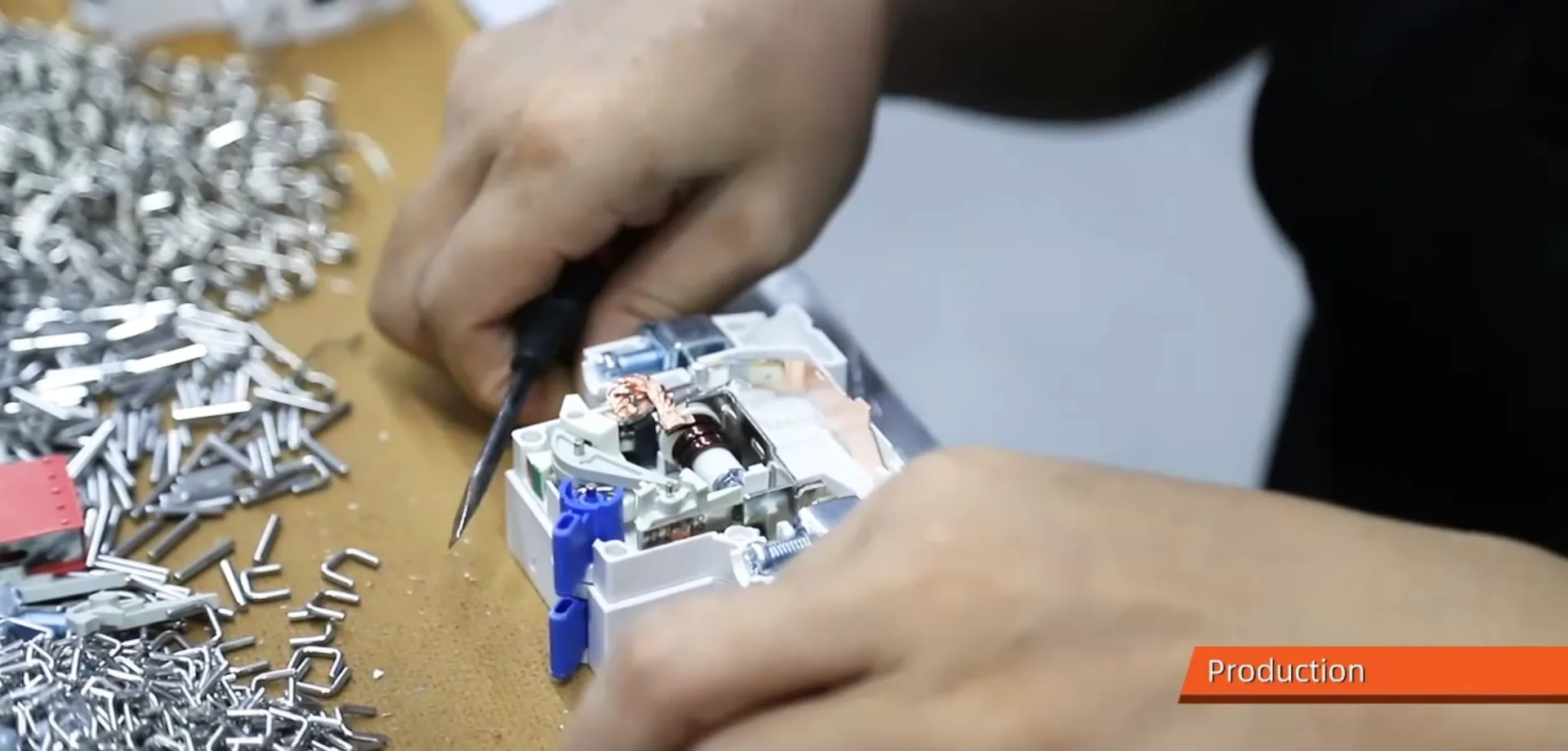
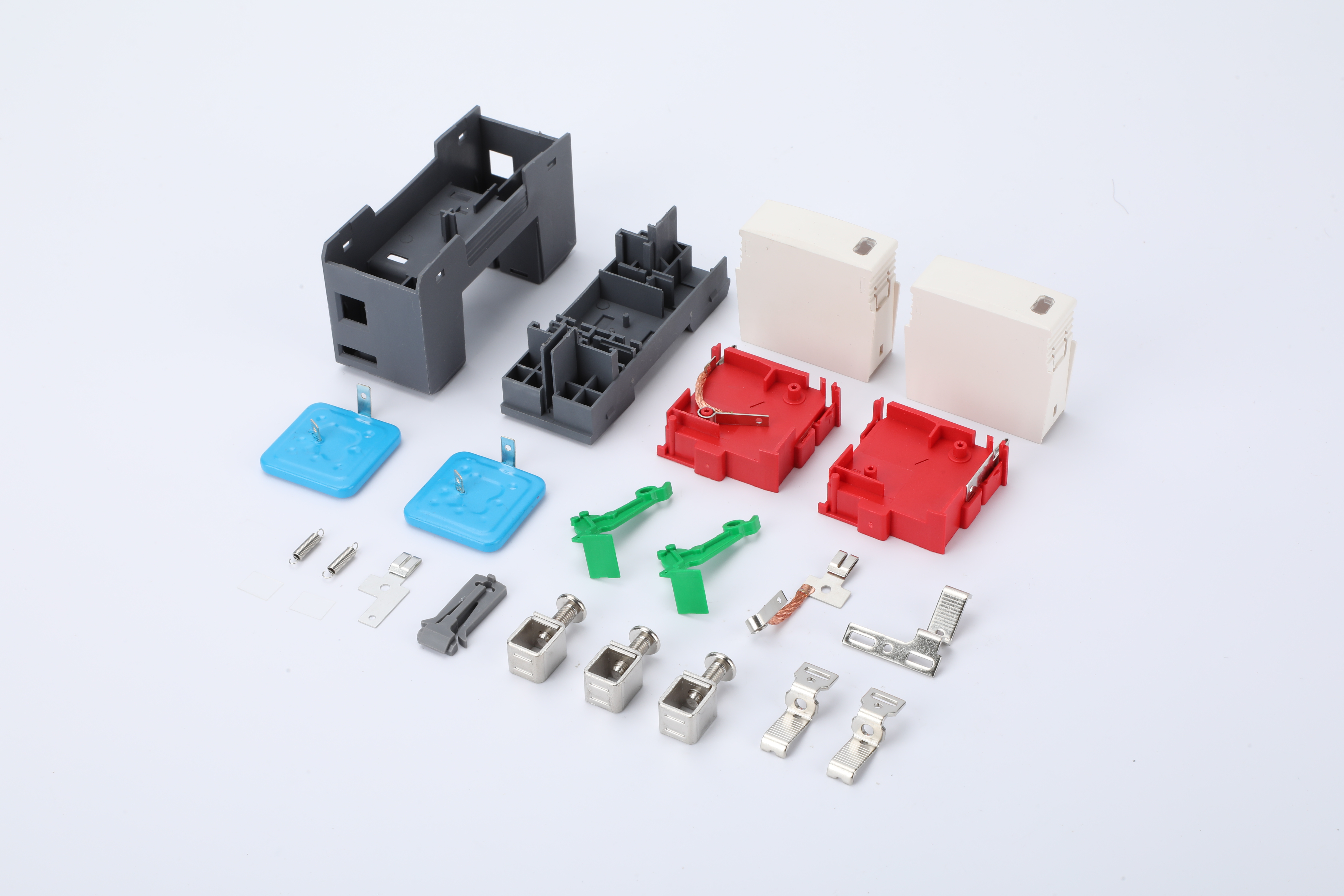
An MCB operates on two fundamental principles: thermal and magnetic protection, housed within a compact device.
- Thermal Protection (Overload): This mechanism guards against sustained excessive current, such as plugging in too many appliances on one circuit. A bimetallic strip inside the MCB heats and bends as current flows above its rated value over time. This bending action triggers the release mechanism, tripping the breaker and preventing overheating of wires, which is a common cause of electrical fires.
- Magnetic Protection (Short Circuit): This mechanism responds to sudden, massive current surges caused by a fault where live and neutral wires touch. A solenoid (electromagnetic coil) creates a strong magnetic field that instantly trips the mechanism, isolating the fault within milliseconds to prevent catastrophic damage to wiring and connected equipment.
This combination allows an MCB to respond precisely to different fault types, after which it can be manually reset, making it reusable and highly convenient.
2. Decoding MCB Types: Choosing the Right Trip Curve (B, C, D)
The most critical selection criterion after current rating is the MCB’s trip curve, which defines its sensitivity to magnetic tripping. Choosing the correct curve is vital for both safety and avoiding nuisance trips.
| Curve Type | Tripping Current Range (x In) | Primary Application | Typical Use Case |
|---|---|---|---|
| Type B | 3 to 5 times rated current | General Purpose | Residential lighting, socket outlets, and circuits with low inrush currents. Offers high sensitivity for personal safety. |
| Type C | 5 to 10 times rated current | Commercial/Inductive Loads | Circuits powering small motors, fluorescent lighting, transformers, and commercial appliance loads where moderate inrush currents are expected. |
| Type D | 10 to 20 times rated current | High Inrush Current Loads | Circuits with very high starting currents, such as large motors, welding equipment, X-ray machines, or industrial transformers. |
Key Insight: Using a Type B MCB on a motor circuit will likely cause it to trip unnecessarily during startup. Conversely, using a Type D in a home socket circuit compromises safety by allowing a higher fault current to persist.
3. Key Selection Criteria for the Right MCB
Selecting an MCB involves more than just amperage. Consider these essential parameters:
Standards & Certification: Ensure MCBs comply with relevant international standards (e.g., IEC/EN 60898-1 for final circuits), which guarantee tested performance and safety.
Rated Current (In): Matched to the current-carrying capacity of the cable in the circuit (e.g., 16A, 20A, 32A). The MCB should protect the cable, not the appliance.
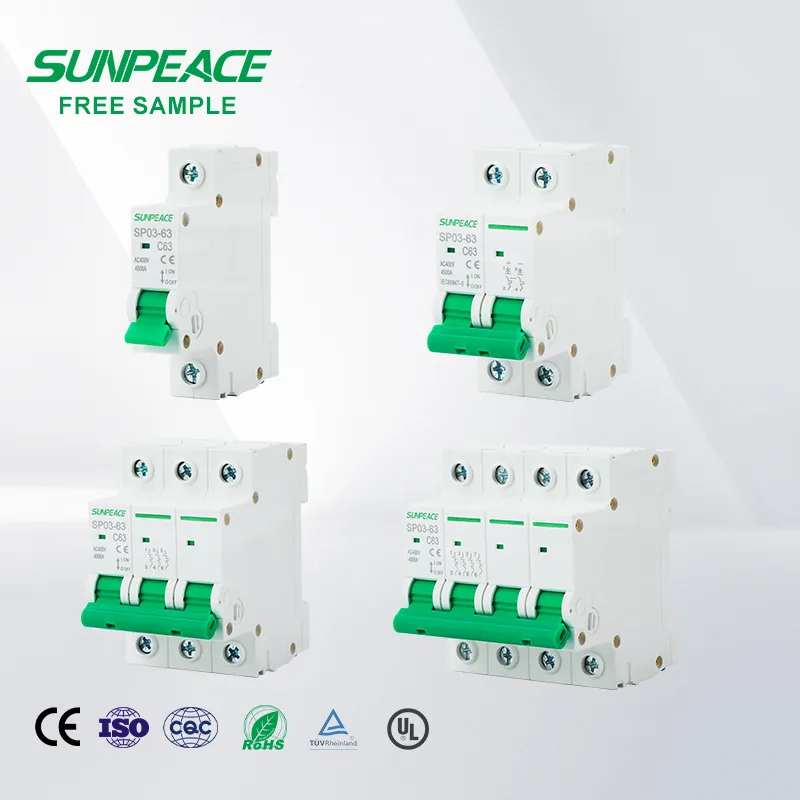
Number of Poles: Single Pole (1P): Breaks only the Live wire; used for final lighting/socket circuits. Double Pole (DP): Breaks both Live and Neutral; used for main switches or specific appliances for complete isolation.
Breaking Capacity (Icn): This is the maximum fault current (in kA) the MCB can safely interrupt without damage. For residential use, 6kA is standard. For commercial/industrial boards near transformers, 10kA or higher may be required based on system fault level calculations.
4. Advanced MCB Applications and the Rise of Smart Protection
Beyond basic protection, MCB technology has evolved:
- DC MCBs: Specially designed for direct current systems, such as in solar PV installations (DC side), battery storage, and EV charging infrastructure. The arc extinction mechanism for DC is different from AC, making dedicated DC-rated MCBs from specialists like Sunpeace essential for safety and reliability in renewable energy applications.
- Smart & Connected MCBs: These integrate with Building Management Systems (BMS) or smart home platforms, providing real-time data on energy consumption, circuit status, and remote switching capabilities, enabling predictive maintenance and enhanced energy management.
5. Sunpeace: Delivering Reliable Circuit Protection Solutions
In a market with varying quality, Sunpeace establishes itself as a provider of dependable electrical protection components. Understanding that correct MCB selection is foundational to system integrity, Sunpeace offers a range of products designed for specific challenges:
- Application-Focused Portfolio: From standard AC MCBs for building wiring to specialized DC MCBs that meet the rigorous demands of photovoltaic systems and energy storage, ensuring compatibility and safety.
- Commitment to Compliance: Products are engineered to meet core international standards, providing a trustworthy foundation for electrical designs.
- Technical Support: Sunpeace assists contractors and engineers in selecting the appropriate protection devices, not just as components, but as part of a coherent system safety strategy.
Conclusion: MCBs as the Cornerstone of Electrical Safety
The Miniature Circuit Breaker is a deceptively simple device that performs a vital life- and property-saving function. A deep understanding of its types, curves, and ratings is not just technical detail—it is a prerequisite for designing safe, efficient, and reliable electrical installations for any project.
Your Next Step: Audit your current or planned electrical designs. Are the MCB curves correctly matched to the load types? For projects involving solar, storage, or other DC systems, have you specified DC-rated circuit protection?
Partnering with a knowledgeable supplier like Sunpeace can streamline this process. We encourage you to view Sunpeace as a resource for both quality products and application guidance, helping to ensure that the fundamental layer of circuit protection in your installation is correctly implemented from the start.
Disclaimer: This guide is for informational purposes. Electrical design, installation, and component selection must always be performed by qualified professionals in accordance with all applicable local wiring regulations and standards.