Circuit Breaker vs Fuse: Your Guide to Choosing the Right Overcurrent Protection
Company News, News 2025-12-19
Confused between a circuit breaker vs fuse? Our detailed guide compares their working principles, key differences, and applications to help you select the ideal protection for your electrical system.
Introduction: The Critical Role of Overcurrent Protection
In any electrical system, safety is paramount. A sudden overload or fault can lead to damaged equipment, fire hazards, and costly downtime. Two fundamental guardians stand against these threats: the circuit breaker and the fuse. While both serve the crucial function of interrupting excessive current, they operate on different principles and are suited to distinct applications. Choosing the correct one is not just a technicality—it’s a decision that impacts system reliability, safety, and long-term cost. This guide breaks down the circuit breaker vs fuse debate, providing clear comparisons to inform your next design or upgrade.
- Understanding the Circuit Breaker: The Resettable Sentinel
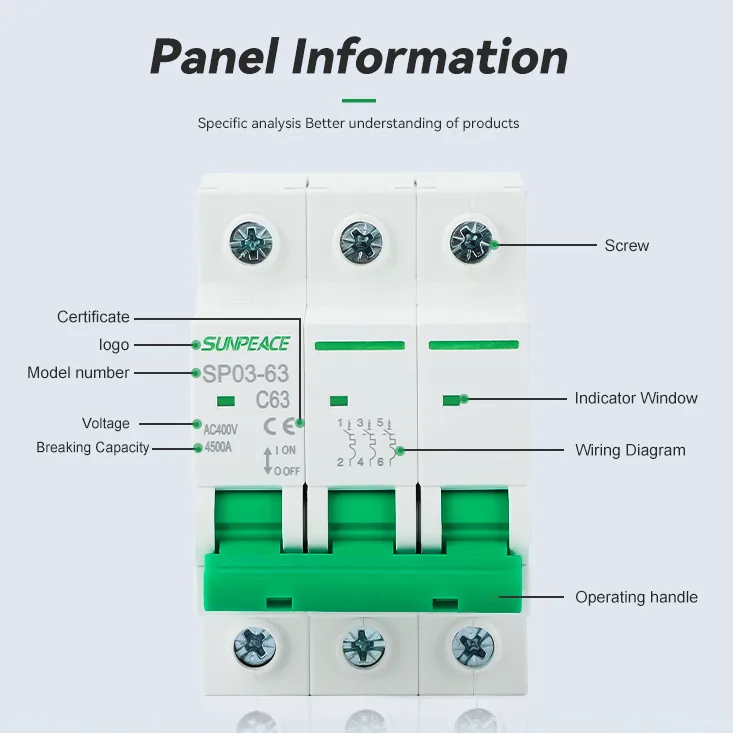
A circuit breaker is an electromechanical switching device designed to protect an electrical circuit from damage caused by overcurrent or short circuit. Its core advantage lies in its reusability.
How It Works:
Under normal conditions, the breaker allows current to flow unimpeded. When a fault—such as an overload or a short circuit—occurs, the excessive current triggers an internal mechanism. This is typically achieved through either:
Thermal Operation: A bimetallic strip heats and bends due to overcurrent, triggering a trip.
Magnetic Operation: A solenoid creates a magnetic field strong enough from a sudden short-circuit current to instantaneously release the latch.
Once tripped, the breaker moves its contacts to the “OFF” position, breaking the circuit. After the fault is identified and resolved, the breaker can be manually reset to restore power, requiring no replacement parts.
2. Understanding the Fuse: The Sacrificial Protector
A fuse is a simpler, passive electrical safety device. It contains a metal wire or filament with a specific current rating, enclosed within a housing. Its operation is based on the principle of sacrificial destruction.
How It Works:
The fuse is placed in series with the circuit. During normal operation, the fuse element conducts electricity without issue. However, when current exceeds its rated value for a sufficient time, the element heats up and melts (or “blows”). This action permanently opens the circuit and stops the flow of current, thereby protecting downstream components. Once a fuse has blown, it cannot be reused and must be replaced with a new unit of identical specifications.
3. Circuit Breaker vs Fuse: A Detailed Side-by-Side Comparison
The following table summarizes the key distinctions to consider in the fuse vs circuit breaker decision-making process.
| Feature | Circuit Breaker | Fuse |
| Operation Principle | Electromechanical: Uses a switch mechanism triggered by thermal or magnetic sensors. | Electro-thermal: Relies on the melting of a conductive element due to heat from overcurrent. |
| Reusability | Reusable. Can be reset after tripping once the fault is cleared. | Single-use. Must be replaced after it blows. |
| Response Time | Slightly slower (milliseconds). Response can be tailored (e.g., B, C, D curves for different inrush currents). | Very fast (microseconds). Provides excellent instantaneous protection. |
| Protection Scope | Protects against both overloads and short circuits. Modern versions can also provide ground fault protection (GFCI). | Primarily protects against overloads and short circuits. Specific types are optimized for different fault profiles. |
| Operation & Reset | Requires manual reset after a trip. Can also be used as a manual switch to disconnect power. | No action until it blows. Requires manual replacement, which involves finding a correct spare. |
| Cost | Higher initial cost. More complex device. | Very low initial cost per unit. |
| Long-Term Cost | Lower long-term cost in applications with frequent or expected minor overloads, as no parts need purchasing for reset. | Can become more expensive over time due to the recurring cost of replacement fuses, especially if faults are common. |
| Space & Installation | Typically requires more panel space. Mounted on a DIN rail or panel. | Very compact. Often used in fuse holders or clips. |
| Application Suitability | Ideal for main power distribution, branch circuits in buildings, industrial control panels, and anywhere easy reset is preferred. | Excellent for protecting sensitive electronic components, in automotive systems, in equipment with high prospective short-circuit currents, and as a cost-effective solution for one-off products. |
4. How to Choose: Circuit Breaker or Fuse?
Your choice between a fuse or circuit breaker should be guided by the specific needs of your application. Consider these critical factors:
System Complexity & Access: For main residential, commercial, or industrial distribution panels where easy identification and restoration of power are key, circuit breakers are the standard choice. For hard-to-access locations or sealed equipment, a long-life fuse might be simpler.
Fault Characteristics: If you need precise, ultra-fast protection for sensitive semiconductor devices (e.g., in a variable frequency drive), a specially rated fuse may be superior. For general branch circuit protection covering a mix of loads, a circuit breaker is more versatile.
Lifecycle Cost: Evaluate the total cost of ownership. While a fuse panel is cheaper to install, a system prone to occasional nuisance trips will incur ongoing fuse replacement costs and downtime. A circuit breaker panel, with its higher upfront cost, may be more economical over decades of service.
Safety & Compliance: Both are safe when used within their ratings. Ensure your choice complies with local electrical codes (e.g., NEC in the USA). For instance, certain codes may mandate breakers for household branch circuits. Never replace a fuse with one of a higher amperage rating, as this compromises safety.
5. Professional Solutions from Sunpeace Electric
Whether your project calls for precise fuses or reliable circuit breakers, sourcing the right components is crucial. Choosing the right electrical protection doesn’t have to be complicated—especially when you source directly from the manufacturer. At Sunpeace Electric, we eliminate the middleman. You get direct access to our wide range of reliable fuses and circuit breakers, alongside true factory-direct benefits like custom circuit breaker panels and custom-tailored technical support from the experts who design and build our products.
Conclusion
The circuit breaker vs fuse discussion doesn’t have a single winner; it has an optimal choice for each unique situation. Circuit breakers offer convenience, reusability, and are ideal for accessible system protection. Fuses provide unmatched speed, simplicity, and cost-effectiveness for protecting specific, sensitive circuits.
By understanding their fundamental differences—how they work, their response profiles, and total cost implications—you can make an informed decision that ensures safety, reliability, and efficiency for your electrical system. Assess your priorities, consult codes and standards, and choose the protector that aligns with your long-term operational goals.
Contact US
Facebook:Sunpeace electric
YouTube:Sunpeace electric
Shop on our Alibaba:Sunpeace electric